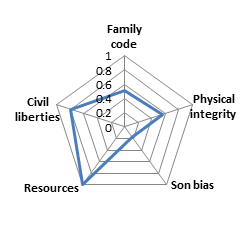
In Zambia, marriage, child custody, property rights and inheritance are governed by a dual legal system of statutory and customary laws.[1]The Marriage Act (1989) provides for the minimum age of marriage at 16 for both men and women, with parental consent needed under the age of 21.[2] These rules, however, apply to statutory and not customary marriages; under customary law, it is legal to marry a girl child who has attained puberty.[3] In its latest report to the Committee on the Elimination of All Forms of Discrimination against Women (CEDAW), the government reported that the payment of a bride price is still traditionally relevant for both statutory and customary marriages.[4]
Regarding parental authority, there are no legal restrictions to women becoming heads of households and equally the new draft constitution grants women equality in marriage.[5] However, in practice husbands are traditionally the heads of families/households in Zambia. In 2010, the government reported that the payment of a bride price provides husbands with absolute rights over children and the reproductive rights of the wife.[6] In the event of divorce following a legal marriage, the courts grant child custody in the best interests of the children. However, in the case of separation after a customary marriage, the children typically stay with their father. Some tribes, however, are matrilineal.[7]
The Intestate Succession Act of 1989 recognises women’s rights to inheritance whether married under statutory or customary Laws, and the new draft constitution also recognizes equality in inheritance.[8] According to the current law, widows have the right to inherit 20% of their husbands’ property, 50% of the estate goes to the children of the deceased (irrespective of gender), 20% to the parents of the deceased, and 10% to other dependents.[9] In polygamous marriages, 50% of the inheritance is divided between the children (irrespective of gender) and the remainder is split equally between the wives.[10]
According to the Food and Agriculture Organisation, the Intestate Succession Act of 1989 law is not widely known, resulting into some families of the deceased choosing to ignore it.[11] As a result, according to the Chronic Poverty Research Centre, in 2007 only 31.77% of widows inherited a majority of their assets after their spouses died.[12] Property grabbing from widows is also a common practice, particularly in rural areas.[13]A 2006 survey by the Central Statistical Office of Zambia found that three out of four victims of property grabbing did not take any action to change their circumstances. Further, the survey found, 22% of the children of widows were affected by inheritance issues, with female children being twice as likely to be affected as male children.[14]
More
Widows are also discriminated against as a result of the practice of ‘widow inheritance’ – this is being claimed by their deceased spouses’ relatives. The 2006 survey found that 15% of female widows were married off to a relation of the deceased, compared to 4% of males. The practice is more common in rural areas although this has been highly discouraged due to fear of HIV contamination.[15]
Data from the latest Demographic Health Survey (2007) provides a snapshot of gender equality in household decision making in Zambia. For large household purchases, 42% of married women reported that decisions were made jointly with their husbands and 44% reported that decisions were made solely by their husbands. Decisions about daily household needs are primarily made by women (60%).[16]
[1] FAO (n.d.) [2] Women (CEDAW) (2010), p.50 [3] CEDAW (2010), p.16 [4] CEDAW (2010), p.49 [5] Technical Committee on Drafting the Zambian Constitution (n.d.); World Bank (2013a) [6] CEDAW (2010), p.49 [7] CEDAW (2010), p.50-51 [8] CEDAW (2010), p.19; Technical Committee on Drafting the Zambian Constitution (n.d.) [9] Centre for Housing Rights and Evictions (2004), p.148 [10] Centre on Housing Rights and Evictions (2004), p.148 [11] FAO (n.d.) [12] Chronic Poverty Research Centre (2011), p.20 [13] Richardson, A. (n.d.) [14] Central Statistical Office of Zambia (2006) [15] Central Statistical Office of Zambia (2006) [16] Demographic Health Survey (2007), p.260
With respect to domestic violence, the 2007 Demographic Health Survey found that almost half of all women had experienced physical violence since they were 15. Of those who experienced physical violence since the age of 15, 77% reported that their current or former husband or partner was the perpetrator.[17] A factor contributing to the high prevalence and tolerance of domestic violence is the acceptance of violence in the community. The 2007 Demographic Health Survey found that significant numbers of both women (62%) and men (48%) believe that a husband is justified in hitting or beating his wife in certain circumstances.[18]Further, the UN Special Rapporteur on violence against women and its causes and consequences reported, after her visit to Zambia in 2010, that “many interlocutors … expressed concern at the fact that the general population seems to condone violence as a way to solve conflicts, particularly within the domestic sphere”.[19]
The Penal Code in Zambia defines rape as an “offence against morality”, providing for heavy penalties, including life imprisonment.[20] Marital rape is not prohibited under the Penal Code;[21]however, the Penal Code’s assault provisions can apply to cases of spousal abuse.[22] In 2011, the government enacted its first comprehensive bill addressing violence against women, the Anti-Gender-Based Violence Act,[23] and the country has a National Plan of Action on Gender-based Violence, put in place in 2008.[24]
Survey data indicates that violence against women is common in Zambia. The 2007 Demographic Health Survey found that one in five women reported that they have experienced sexual violence at some point in their lives. The majority (64%) of women reported that their current or former husband, partner, or boyfriend committed the act of sexual violence. 19% of women who were younger than 15 years old when their first experience of sexual violence occurred reported that the perpetrators was related to them .[25]
The Anti-Gender-Based Violence Act no.1 of 2011 defines sexual abuse as “ including the engagement of another person in sexual contact, whether married or not, which includes sexual conduct that abuses, humiliates or degrades the other person or otherwise violates another person’s sexual integrity, or sexual contact by a person aware of being infected with HIV or any other sexually transmitted infection with another person without that other person being given prior information of the infection’’. As such, currently the Anti-Gender-Based Violence Act is the only specific legislation prohibiting sexual harassment. According to the US Department of State and the UN Special Rapporteur on violence against women, the Penal Code contains provisions under which such violations can be prosecuted.[26]
The National Action Plan on Gender-based Violence (GBV) 2008-2013 defines gender-based violence as a global health, human rights, and development problem.[27] The plan promotes and outlines a “systematic, complementary, and comprehensive” approach to gender-based violence, which focuses on the reform of laws and policies, creating awareness amongst the Zambian population, building the capacity of multiple sectors in the Zambian society tasked with addressing the problem (health, justice, education, etc.), and providing a holistic response to victims.[28] There are multiple sets of indicators to address the many facets of the plan. The indicators for the justice system include: the number of legislative instruments passed, number of members of the justice system trained in GBV response, number of GBV law and policies disseminated to the public, increase in reported GBV cases and convictions, and increased confidence in the judicial system.[29]
The 2010 letter to CEDAW, Human Rights Watch reports that sexual violence and other severe forms of violence against women are common for women in detention, primarily perpetrated by police officials. The report states that police officers try to coerce female detainees into sex in exchange for their release.[30] In addition to violence in detention centres, which was also described by the UN Special Rapporteur on violence against women, its causes and consequences, conditions for female detainees during the Special Rapporteur’s visit were found to be degrading, and included issues of overcrowding, lack of medical attention, as well as stigma against pregnant women. [31]
Key challenges in Zambia are the lack of enforcement of the law and culture of impunity for perpetrators of violence against women. The World Organisation against Torture reports that although the government has established specialist units with the police force to respond to violence against women, discriminatory attitudes amongst the police and judiciary prevent women from reporting violence. It is reported that women are often pressured by law enforcement officials into withdrawing complaints of violence or reconciling with their abusive husbands.[32]Further, the Southern Africa Gender Protocol Alliance noted that, even with the passage of the 2011 Anti-Gender Based Violence Act, there are many challenges to overcome gender based violence in order to fully and effectively curtail violence against women; these include: “limited financial and human resources; weak monitoring and evaluation strategies; slow court trials; public awareness…and types of violence not catered for by the Act.” [33]
More
Limitations on women’s reproductive rights also infringe upon women’s physical integrity in Zambia. The 1972 Termination of Pregnancy Act allows access to safe abortion on medical or social grounds. However, due to a lack of awareness of the legality of abortion amongst women and health care providers, many maternal deaths are the result of complications from unsafe abortions.[34]
[17] Demographic Health Survey (2007), p.275-278 [18] Demographic Health Survey (2007), p.263-265 [19] UN Human Rights Council (2011), p. 6[20] Penal Code, Chapter 87, Sections 133 and 134; OMCT (2007), p.20 [21] OMCT (2007), p.20 [22] OMCT (2007), p.20 [23] Southern Africa Gender Protocol Alliance (2011) [24] Republic of Zambia (2008) [25] Demographic Health Survey (2007), p.278 [26] Penal Code Amendment Act No. 15 of 2005, UN Human Rights Council (2011) p. 10; US State Department (2013), p. 17 [27] Republic of Zambia (2008), p. 6 [28] Republic of Zambia (2008), p. 18-19 [29] Republic of Zambia (2008), p. 21 [30] Human Rights Watch (2010) [31] UN Human Rights Council (2011), p. 8-9 [32] OMCT (2007), p.9 [33] Southern Africa Gender Protocol Alliance (2011) [34] OMCT (2007), p.15
The male-to-female sex ratio at birth in 2013 is 1.03 and for the working age population (15-64 years old) is of 1.01.[35]
There is evidence to suggest that Zambia is a country of low concern in relation to missing women due to AIDS mortality.
[35] CIA. https://www.cia.gov/library/publications/the-world-factbook/fields/2018.html (accessed 28/03/2014)
Zambia has a two-tier system of land ownership, consisting of state and customary land.[36] Although the government passed the Land Act in 1996, which guaranteed women the possibility of being land-owners, the legislation simultaneously allows for customary laws to dictate land ownership which mainly confers land ownership to men.[37] Under customary law, men dominate the allocation, inheritance and use of land. Women generally lack control over land but may have access and user rights to the land.[38] In 2010, the government announced that it would enforce a previously enacted 30% quota on land allocation for women.[39] However, according to the latest human rights report by the US Department of State, women lack sufficient credit to purchase land or property, throwing the efficacy of the quota into question.[40] There is no recent data on the exact percentage of women’s land ownership compared to men’s.
With respect to women’s access to property other than land, in a statutory marriage, women are entitled to enter into contracts and have access to property other than land, either individually or jointly with their husbands.[41] Women who enter into customary marriages are not authorised to acquire possessions; after a divorce, they are entitled to keep only kitchen utensils and gifts received from their husbands.[42]
The difficulties Zambian women experience in obtaining access to bank loans is related to their lack of ownership rights and lack of economic empowerment. Most women are unable to provide the required guarantees and, although the practice is illegal, banks often demand that women provide proof of their husbands’ consent when applying for loans.[43] Evidence indicates that, due to advocacy and lobbying efforts, there has recently been a significant increase in the number of women with access to credit, particularly in urban areas. [44] According to the latest data from the World Bank, higher percentages of women (23.3) than men (19.4) had accounts at formal financial institutions in 2011.[45]During the same year, a higher percentage of women (7.8) than men (4.4) took out loan from financial institutions,[46]and women made up the majority (53.56%) of borrowers at microfinance institutions.[47]
As a way to empower women socially and economically, KenTel, Rwanda Telecentre Network and Southern Africa Telecentre Network implemented a digital literacy programme targeting women in rural and urban areas. Known as the Telecentre Women Campaign, the initiative aimed to empower disadvantaged women with ICT knowledge for personal growth and greater opportunities. As a result, from July to November 2013, 300 women from Kenya, Rwanda and Zambia gained basic knowledge of ICT to help them improve their businesses and employment.[48]
[36] CEDAW (2010), p.44 [37] Sichikwenkwe, P. (2009), p.51 [38] CEDAW (2010), p.44 [39] Southern Africa Gender Protocol Alliance (2010) [40] US Department of State (2013), p. 18 [41] World Bank (2013a) [42] United Nations Development Programme (n.d.), p.6 [43] Sichikwenkwe, P. (2009), p.50 [44] Sichikwenkwe, P. (2009), p.50 [45] World Bank (2013b) [46] World Bank (2013b) [47] Microfinance Information Exchange (2013) [48] Telecentre Women, http://women.telecentre.org/?page_id=224
There are no reported legal restrictions on women’s freedom of movement in Zambia. However, in practice, the 2007 Demographic Health Survey provides data on the extent to which men in Zambia support women’s right to make decisions about their movement. When asked who should make decisions about visits to a wife’s family or relatives, only 7% of married men said the wife should make the decision, and 54% said the husband should make the decision.[49]
The US Department of State reports that the government in Zambia generally respects the right to freedom of association.[50] There is evidence to suggest that Zambia has an active women’s movement with the civil society organisations leading major reforms such as the 2011 act addressing gender-based violence, as noted above. However, not all organising is legal. Homosexuality remains criminalised in Zambia, and LGBT rights’ activists have been imprisoned and met with acts of societal violence.[51] However, there have also been developments in 2013 in this regard as well; in November 2013, the First Lady of Zambia stated that “no one should be discriminated against because of their sexual orientation”.[52]
Women have the same rights as men to vote and run for election in Zambia. However, there is no quota system to encourage women’s participation in politics. The government, in its last report to CEDAW, cited the lack of a quota system as a contributor to the low level of women participating in decision-making and leadership positions.[53]
More
In addition to the non-discrimination provisions in the constitution, Industrial and Labour Relations Act specifically prohibits discrimination on the basis of sex in employment.[54] Further, the Employment Act provides for paid maternity leave - for women in private and public sectors - of 12 weeks at full pay (provided by the employer) and protects women from dismissal as the result of pregnancy.[55]
[49] Demographic Health Survey (2007), p.260 [50] US Department of State (2013) [51] US Department of State, (2013), p. 23 [52] Lee, R. (2013) [53] CEDAW (2010), p. 26 [54] CEDAW (2010), p.35 [55] ILO (2011)
Central Statistical Office of Zambia (2006) Gender Based Violence (GBV) Survey 2006 Summary Report, available at http://www.zamstats.gov.zm/media/gender_based_violence.pdf, accessed 11 January 2011.
Centre for Housing Rights and Evictions (2004) Bringing Equality Home: Promoting and Protecting the Inheritance Rights of Women, A survey of law and practice in Sub-Sahara Africa http://www.cohre.org/sites/default/files/bringing_equality_home_-_promoting_and_protecting_the_inheritance_rights_of_women_0.pdf (accessed 30 November 2013).
Chronic Poverty Research Centre (2011) Widowhood and asset inheritance in sub-Saharan Africa: empirical evidence from 15 countries, http://www.chronicpoverty.org/uploads/publication_files/WP183%20Peterman.pdf (accessed 30 November 2013).
Demographic Health Survey (2007) Zambia Demographic and Health Survey 2006-07, available at http://www.measuredhs.com/ (accessed 30 November 2013).
Food and Agriculture Organisation of the United Nations (FAO) (n.d.) Gender and Land Rights Database Full Country Report – Zambia [database] http://www.fao.org/gender/landrights/ (accessed 30 November 2013).
Human Rights Watch (2010) Submission to United Nations Committee on Discrimination Against Women, http://www2.ohchr.org/english/bodies/cedaw/docs/ngos/HRW_Zambia_CEDAWS49.pdf, (accessed 30 November 2013).
International Labour Organization (ILO) (2011), Database of Conditions of Work and Employment Laws [database] http://www.ilo.org/dyn/travail/travmain.home (accessed 26 November 2013).
Lee, R. (2013) Zambia: Miracles Do Happen in Zambia. All Africa.com, 6 November 2013 http://allafrica.com/stories/201311060732.html (accessed 30 November 2013)
Microfinance Information Exchange (2013) Cross Market Analysis, % of Female Borrowers by Country. [database] http://reports.mixmarket.org/crossmarket (accessed 30 November 2013).
OMCT (2007) Human Rights Violations in Zambia Part II: Women’s rights, Shadow Report: UN Human Rights Committee, http://www.omct.org/files/2005/09/3065/zambia_omct_alt_report_hrc_women.pdf, (accessed 30 November 2013).
Republic of Zambia (2008) National Action Plan on Gender-based Violence 2008-2013. Republic of Zambia, Gender in Development Division.
Richardson, A. (n.d.) Widow’s Inheritance Rights in Africa: The Need to Integrate Cultural Understanding and Legal Reform. http://www.wcl.american.edu/hrbrief/11/2richardson.pdf (accessed 16 December 2013).
Sichikwenkwe, P. (2009) Southern African Development Community Gender Protocol Baseline Study: Zambia http://www.genderlinks.org.za/article/sadc-gender-protocol-barometer-baseline-study-zambia-2009-10-16 (accessed 30 November 2013).
Southern Africa Gender Protocol Alliance (2010) Zambia Enforces a 30% Quota for Women’s Land Allocation. http://www.genderlinks.org.za/article/zambia-enforces-a-30-quota-for-womens-land-allocation-2010-11-08 (accessed 30 November 2013).
Southern Africa Gender Protocol Alliance (2011) Zambia: Anti-gender Based Violence Act Passed. http://www.genderlinks.org.za/article/zambia-anti-gender-based-violence-act-passed-2011-10-07 (accessed 30 November 2013).
Technical Committee on Drafting the Zambian Constitution (n.d.) http://zambianconstitution.org// (accessed 16 December 2013).
UN Human Rights Council (2011) Report of the Special Rapporteur on violence against women, its causes and consequences. Mission to Zambia. A/HRC/17/26/Add.4,
United Nations Committee on the Elimination of Discrimination Against Women (CEDAW) (2010) Consideration of Reports Submitted by States Parties Under Article 18 of the Convention on the Elimination of All Forms of Discrimination against Women: Zambia, Combined Fifth and Sixth Periodic Reports of States Parties, CEDAW/C/ZMB/5-6, Geneva.
United Nations Development Programme (n.d.) Property Rights in Zambia, http://www.undp.org/legalempowerment/reports/National%20Consultation%20Reports/Country%20Files/26_Zambia/27_4_Property_Rights.pdf (Accessed 30 November 2013).
United Nations Population Division (2007) World Abortion Policies 2007, Available at http://www.un.org/esa/population/publications/2007_Abortion_Policies_Chart/2007_WallChart.pdf,( accessed 13 October 2010).
US State Department (2010) 2009 Country Reports on Human Rights Practices: Zambia, Available http://www.state.gov/g/drl/rls/hrrpt/2009/af/135983.htm, (accessed 11 January 2011).
US State Department (2013) 2012 Country Reports on Human Rights Practices: Zambia, www.state.gov/documents/organization/204393.pdf (accessed 30 November 2013)
World Bank (2013a) Women, Business, and the Law [database] http://wbl.worldbank.org/ (accessed 30 November 2013).
World Bank (2013b) Global Financial Inclusion Database [database] http://databank.worldbank.org/Data/Views/reports/tableview.aspx (accessed 30 November 2013).